£1.00

A calm home rarely comes from adding more. It usually comes from choosing materials that feel settled, familiar, and easy to live with.
Jute rugs have become a quiet constant in natural interiors for this reason. They do not compete for attention. They ground a room, soften the space visually, and bring in texture without noise. At the same time, they are not a universal solution, and they are not without limits.
This guide is designed to help you decide whether a jute rug is right for your home, what to expect from it day to day, and how to choose a size and style that feels right rather than rushed.
Jute is a natural fibre taken from the stalks of the jute plant. Once harvested, the fibres are spun into thick threads and woven into rugs with a visible, tactile texture.
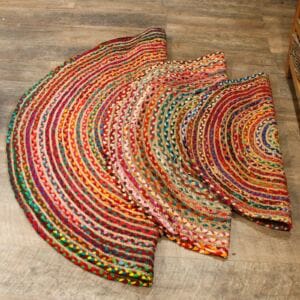
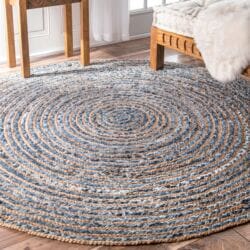
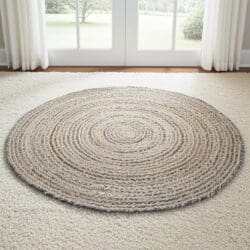
Unlike synthetic rugs, jute rugs are not uniform. Small variations in tone and weave are part of their character. This gives them a relaxed, lived-in feel that works particularly well in homes that value simplicity and natural materials.
Rather than disappearing into a space, a jute rug tends to anchor it.
Calm interiors depend on visual rest. When there are too many colours, patterns, or artificial finishes, a room can feel unsettled even if everything technically “matches”.
Jute rugs help counter this by offering:
They work especially well alongside wood, linen, stone, ceramics, and soft lighting. In these settings, jute feels intentional rather than decorative.
Yes, and it is better to be clear about them.
Jute rugs are practical, but they are not designed to cope with constant moisture or heavy treatment. Their limitations are part of what makes them natural.
Jute fibres do not respond well to excess water. If a rug becomes very wet, the fibres can weaken or discolour, and the rug may lose its shape.
Read this article for more detail: What Are the Disadvantages of a Jute Rug?
Prolonged exposure to strong, direct sunlight can cause gradual fading over time. This happens slowly, but it is worth considering in very bright rooms.
Jute has a firmer feel than wool or cotton. Many people like this underfoot, but it may not suit those looking for softness above all else.
These are not faults. They are characteristics of an untreated, plant-based fibre.
For many UK homes, yes.
Jute works well in temperate climates and suits everyday living when placed thoughtfully. It is particularly well suited to living rooms, bedrooms, dining areas, and hallways where visual calm matters more than plush comfort.
Read this article for more detail: Are Jute Rugs a Good Idea for UK Homes?
The key is choosing the right room and accepting that jute is low-maintenance, not maintenance-free.
Occasional dampness is usually fine if the rug dries quickly. Problems tend to arise when moisture is frequent or prolonged.
If a jute rug gets very wet:
Read this article for more detail: What Happens to a Jute Rug When It Gets Wet?
For this reason, spills should be blotted promptly, and wet cleaning should be avoided. Regular vacuuming and dry care are usually enough.
With normal household use, a jute rug can last for several years.
Longevity depends on:
Rather than suddenly wearing out, jute rugs tend to soften and settle over time. Many people find this gradual change part of their appeal.
Read this article for more detail: How to Care for a Jute Rug (Without Stress)
When choosing between natural fibres, the decision often comes down to feel and lifestyle rather than durability alone.
Jute sits comfortably in the middle, which is why it is often chosen for calm, lived-in spaces rather than high-traffic zones.
Read this article for more detail: Jute vs Sisal vs Cotton Rugs
Jute rugs are versatile when used in the right places.
Well suited to:
Less suitable for:
Used thoughtfully, a jute rug feels effortless. Used in the wrong place, it can feel demanding.
In most cases, yes.
A rug pad helps to:
This is particularly useful on smooth floors such as wood, laminate, or tiles.
Read this article for more detail: Where Jute Rugs Work Best in the Home
Size is where many people hesitate, and it is also where regret can creep in later.
Smaller jute rugs are popular because they:
Larger rugs create a stronger sense of grounding and help define a space more clearly, especially in living rooms.
Many people begin with a smaller rug and later choose to size up once they see how jute works in their home. There is no wrong order, only what feels comfortable.
Read this article for more detail: Choosing the Right Size Jute Rug
At Spencer Vibes, jute rugs are selected for how they feel in real homes rather than how they perform in a studio setting.
The focus is on:
These rugs are not designed to dominate a room. They are meant to support slower, quieter living.