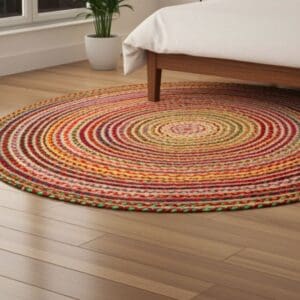
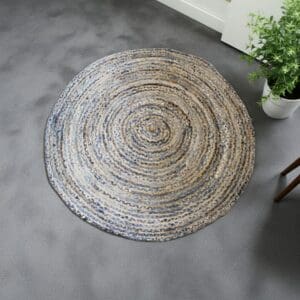
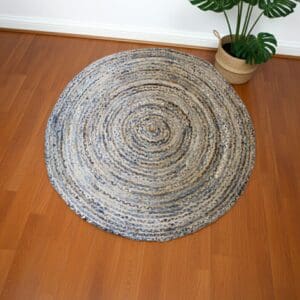
When choosing a natural rug, the decision is rarely just about colour or pattern. Material plays a much bigger role in how a rug feels underfoot, how it behaves over time, and how well it fits into everyday living.
Jute, sisal, and cotton rugs are often grouped together, but they serve different purposes. Understanding those differences makes it much easier to choose a rug that feels right rather than one that simply looks right online.
Understanding the Differences at a Glance
All three materials are natural, but they behave very differently once they are in your home.
- Jute is relaxed, textured, and visually grounding
- Sisal is firm, structured, and highly durable
- Cotton is soft, lightweight, and flexible
None is objectively better than the others. The best choice depends on how and where the rug will be used.
Read this article for more: Jute Rugs: A Practical Guide for Calm, Natural Homes
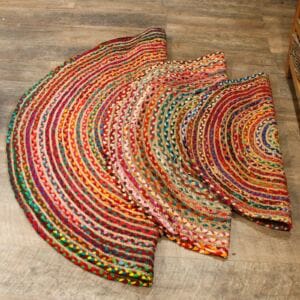
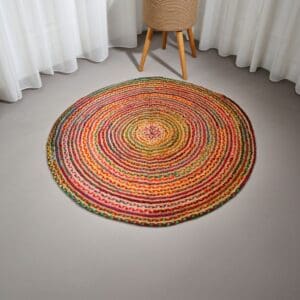
Jute Rugs: Texture and Calm
Jute rugs are often chosen for their balance.
They offer:
- A natural, earthy appearance
- Moderate softness underfoot
- Visual warmth without heaviness
- A relaxed, lived-in feel
Jute works particularly well in living rooms and bedrooms where calm and texture matter more than extreme durability or softness.
Because jute sits between sisal and cotton in feel, it is often the easiest material to live with for everyday spaces.
Sisal Rugs: Structure and Durability
Sisal is a tougher fibre than jute. It has a firmer feel and a more structured appearance.
Sisal rugs are often chosen for:
- High-traffic areas
- Hallways
- Homes where durability is a priority
However, sisal can feel coarse underfoot and is less forgiving in spaces where comfort matters. It also reacts poorly to moisture, similar to jute, and can stain if spills are not handled quickly.
Cotton Rugs: Softness and Flexibility
Cotton rugs feel very different from both jute and sisal.
They are:
- Soft and lightweight
- Easy to move or reposition
- Often washable, depending on construction
Cotton rugs work well in bedrooms, nurseries, or casual spaces. Over time, they tend to show wear more quickly than jute or sisal, particularly in high-traffic areas.
Comfort is often subjective, but there are general differences worth noting.
- Cotton feels the softest under bare feet
- Jute feels firm but forgiving
- Sisal feels the most rigid
For homes that value calm and balance, jute often provides enough comfort without losing structure.
Moisture and Maintenance Differences
All three materials prefer dry conditions, but cotton is generally the most forgiving.
- Jute should be kept dry and spot cleaned
- Sisal is sensitive to moisture and staining
- Cotton can sometimes be washed, depending on the rug
If moisture is unavoidable, cotton may be the safer option. In dry rooms, jute and sisal both perform well when cared for properly.
Read this article for more detail: What Happens to a Jute Rug When It Gets Wet?
Which Material Works Best in Which Room?
- Living rooms: jute or sisal
- Bedrooms: jute or cotton
- Hallways: sisal or jute (upstairs)
- Children’s spaces: cotton
- Dining areas: jute (with care)
Room choice often matters more than the material itself.
Read this article for more: Where Jute Rugs Work Best in the Home
Making the Choice Feel Simpler
If you want a rug that:
- Feels natural without being harsh
- Grounds a space visually
- Ages gently over time
Jute is often the most balanced option.
For those unsure, starting with a smaller jute rug can be a low-pressure way to see how the material feels in your home.
You can explore the full jute rug collection here.
Natural materials tend to reveal their value gradually. The right rug is usually the one that supports how a room is used rather than the one that promises the most on paper.
Like this:
Like Loading...