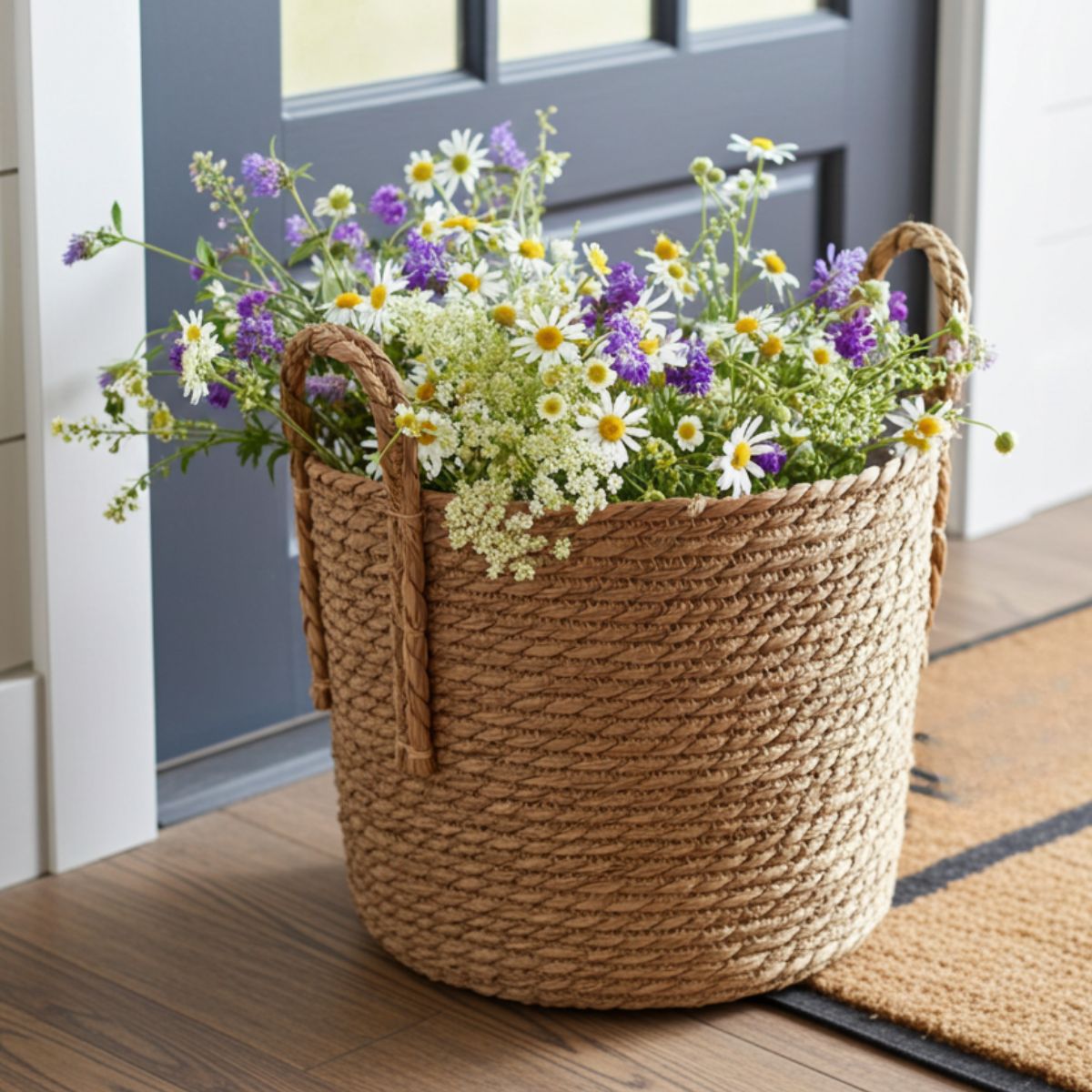
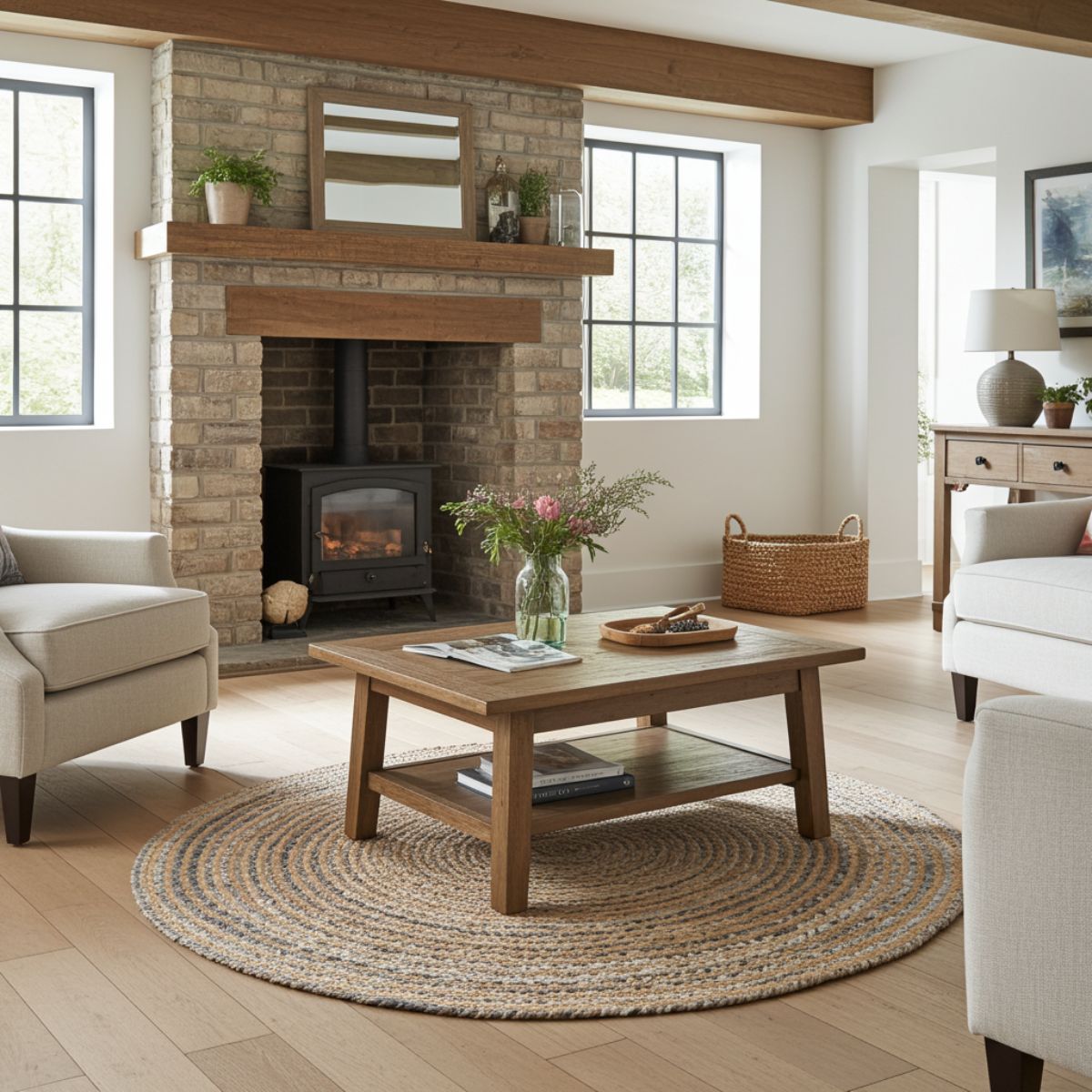
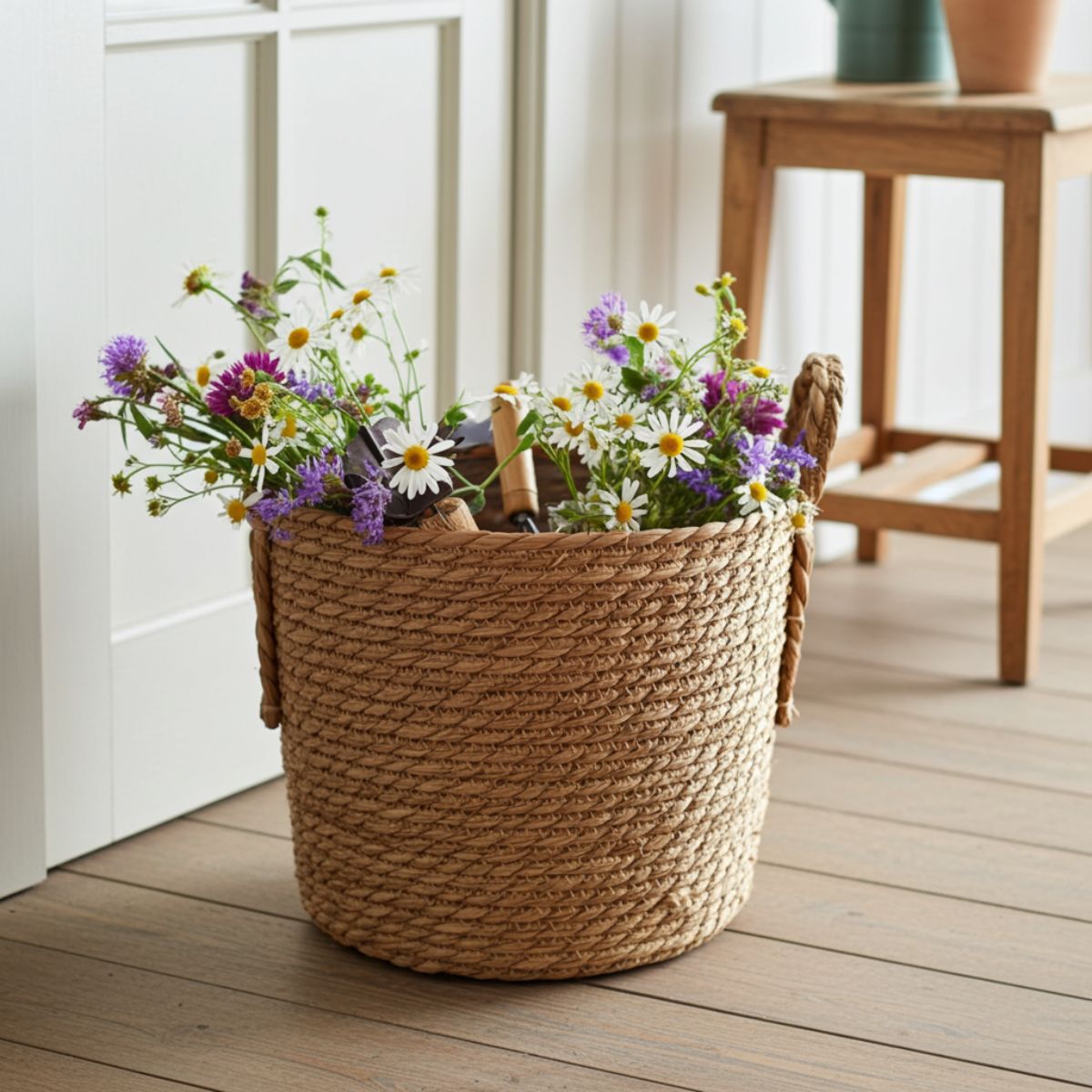
Living and working in a small UK flat while handling full remote days brings its own set of difficulties. The same four walls that once felt cosy can start to close in after hours of staring at a screen, with background noise from neighbours or the street filtering through thin walls, posture slipping on whatever chair is handy, and the lack of natural separation between work and everything else making it hard to switch off properly.
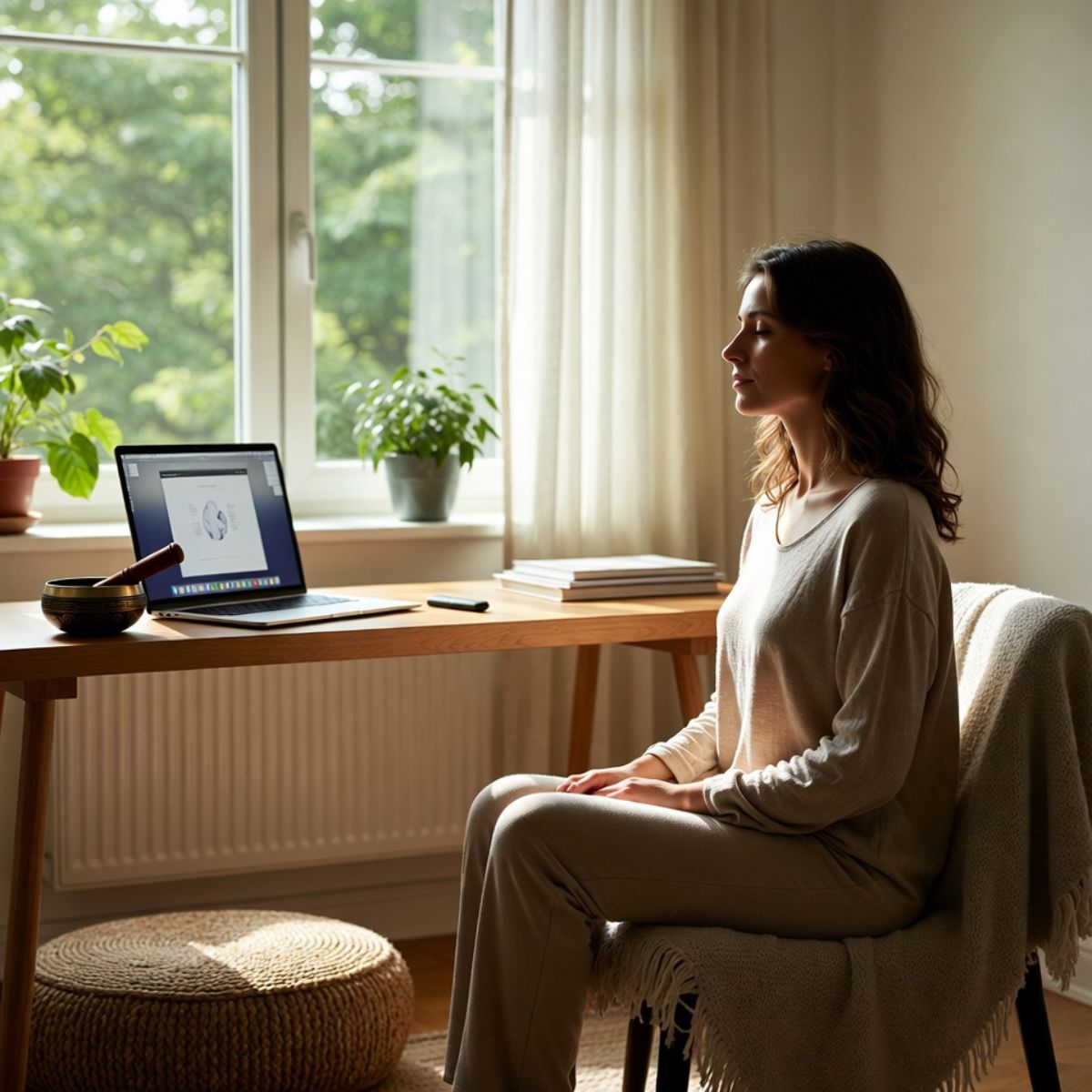
This guide pulls together several practical approaches that suit people in similar situations. It covers seated yoga sequences you can do without leaving your chair, brief meditation methods that fit into short gaps between tasks, basic Ayurvedic habits adapted for everyday urban life, and the deliberate use of simple home items—things like an essential oil diffuser for scent, a singing bowl for sound, floor cushions or textured throws for comfort underfoot or on your lap, and natural-fibre rugs or baskets that bring quiet texture to the space. Together, these create a small, supportive environment that supports concentration and recovery without demanding extra square footage or complicated setups.
The aim is to make the home workspace feel less like a pressure point and more like a place where you can actually think clearly and finish the day without feeling drained.
Why Mindful Living Matters for Remote Workers and Urban Dwellers
Extended screen time often leads to postural strain, shallow breathing, scattered attention, and elevated cortisol levels. Mindful practices address these directly by:

- Activating the parasympathetic nervous system for relaxation and recovery.
- Strengthening interoceptive awareness (sensing internal body signals) to prevent burnout.
- Reducing reactivity to distractions and improving emotional regulation.
- Supporting better sleep, digestion, and immune resilience through consistent routines.
When combined with thoughtfully chosen home items—natural textures for grounding, sound for focus, and scent for mood regulation—these methods become more accessible and effective in small living spaces.
1. Mindful Desk Yoga: Gentle Poses to Release Tension and Restore Presence
Seated or chair-supported yoga provides immediate physical and mental relief during work hours. Perform these slowly, synchronising movement with breath, to interrupt autopilot patterns and re-anchor attention.
- Seated Mountain Pose — Sit tall, lengthen the spine, soften shoulders; take 5–8 mindful breaths to establish alignment and calm.
- Seated Cat-Cow Stretch — Alternate gentle arching and rounding of the spine for 6–10 cycles to mobilise the back and deepen breath awareness.
- Seated Neck and Shoulder Release — Tilt ear to shoulder, hold 3–5 breaths per side, followed by shoulder rolls to ease upper-body tension.
- Seated Spinal Twist — Rotate gently, holding 4–6 breaths per side, to relieve mid-back stiffness and refresh focus.
- Seated Forward Fold Variation — Hinge forward from the hips, rest hands on shins or floor, breathe into the back body for 5–8 cycles.
These poses improve circulation, posture, and proprioception while fostering non-judgmental observation of bodily sensations.
2. Quick Mindfulness Meditation Techniques for Busy Days
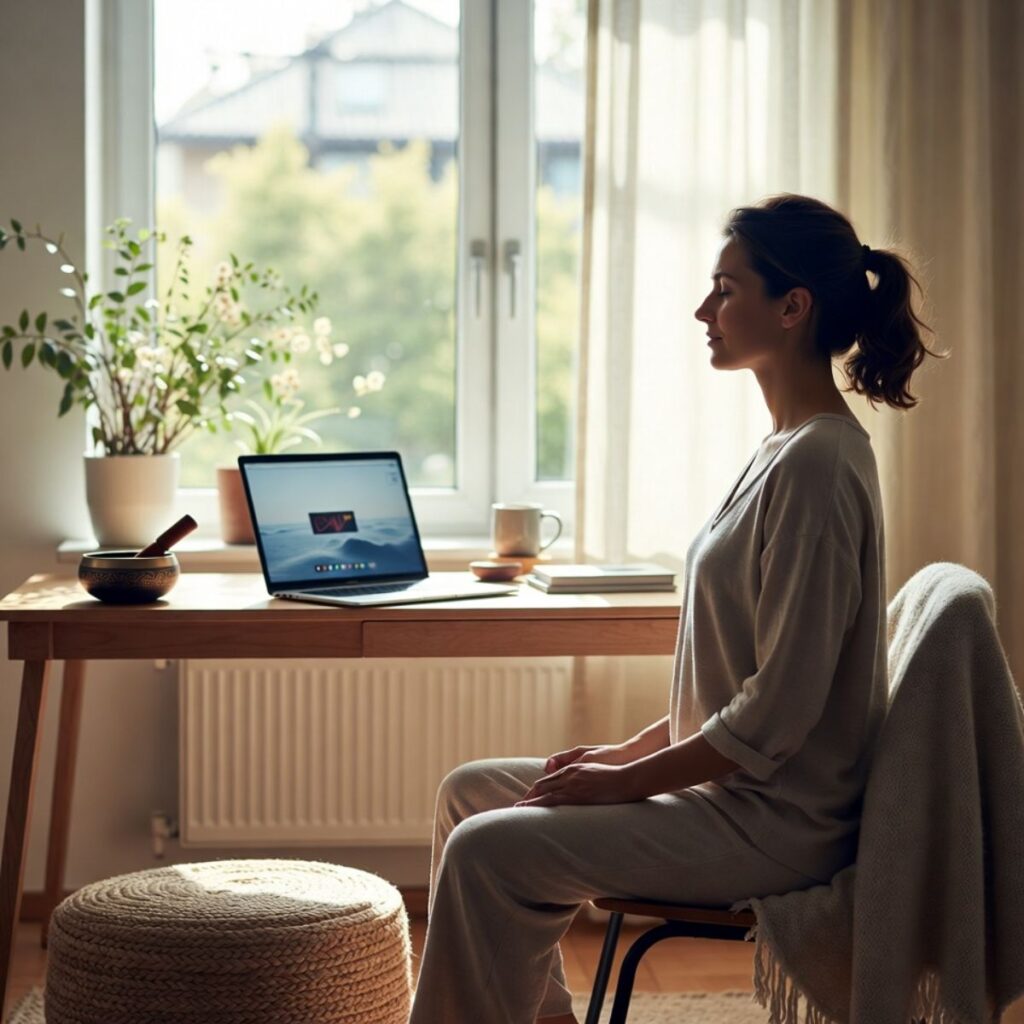
Meditation strengthens attentional control and emotional resilience. Start with 3–5 minutes; use a singing bowl to signal the start and end of practice for auditory anchoring.
- Breath Awareness — Focus on natural inhalation and exhalation at the nostrils or abdomen; gently return attention when the mind wanders.
- Body Scan — Systematically observe sensations from toes to head, noting tension without forcing change.
- Loving-Kindness (Metta) — Repeat phrases of goodwill first toward yourself, then outward to others, cultivating compassion.
- Open Monitoring — Rest in broad awareness of thoughts, sounds, and feelings as they arise and pass.
- Mindful Walking — Walk slowly indoors, coordinating steps with breath to integrate mindfulness into movement.
Consistent short sessions yield measurable reductions in perceived stress and improvements in focus.
3. Ayurvedic Wellness Practices: Daily Rituals for Long-Term Balance
Ayurveda personalises health through dosha awareness (Vata, Pitta, Kapha) and dinacharya (daily routine), emphasising digestion (agni), toxin elimination, and alignment with natural cycles.
Key adaptable rituals include:
- Rise early (ideally before sunrise) and begin with warm water to stimulate digestion.
- Perform tongue scraping and self-massage (abhyanga) with warm oil suited to your dosha—sesame for grounding, coconut for cooling.
- Practise gentle yoga or pranayama (e.g., alternate nostril breathing) to balance energy.
- Eat the largest meal midday; favour warm, freshly prepared foods.
- Wind down early: dim lights, limit screens, and retire by 10 p.m.
These habits support stable energy, clearer thinking, and better sleep—especially valuable in variable UK climates and irregular remote schedules.
4. Sensory Grounding with Home Essentials: Enhancing Practice Through Texture, Sound, and Scent
Natural, calming items amplify mindfulness by engaging multiple senses:
- Essential Oil Diffusers — Use lavender, bergamot, or cedarwood blends for quick three-breath aromatherapy resets.
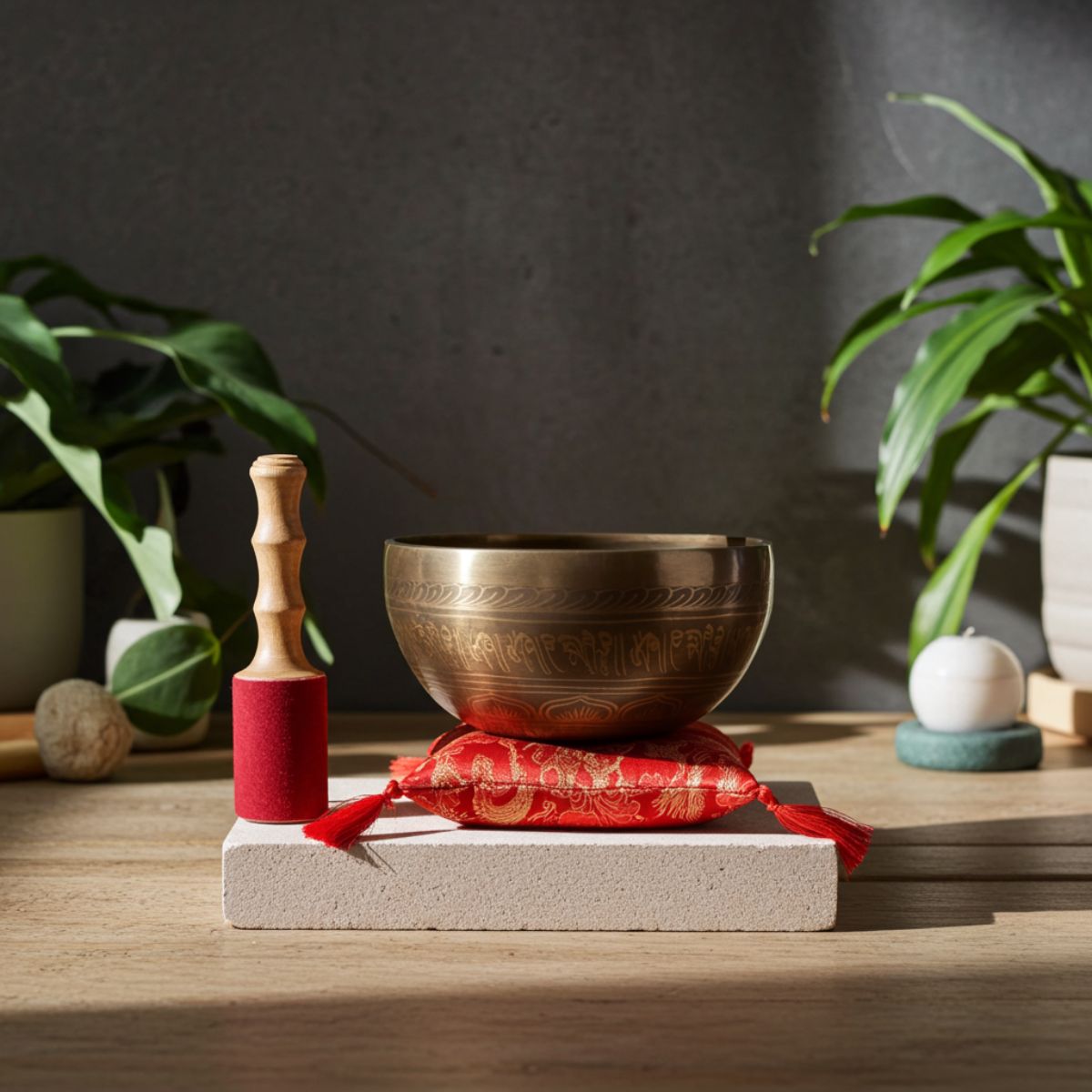
- Tibetan Singing Bowls — Strike gently to create resonant tones that mask distractions and guide focused breathing.
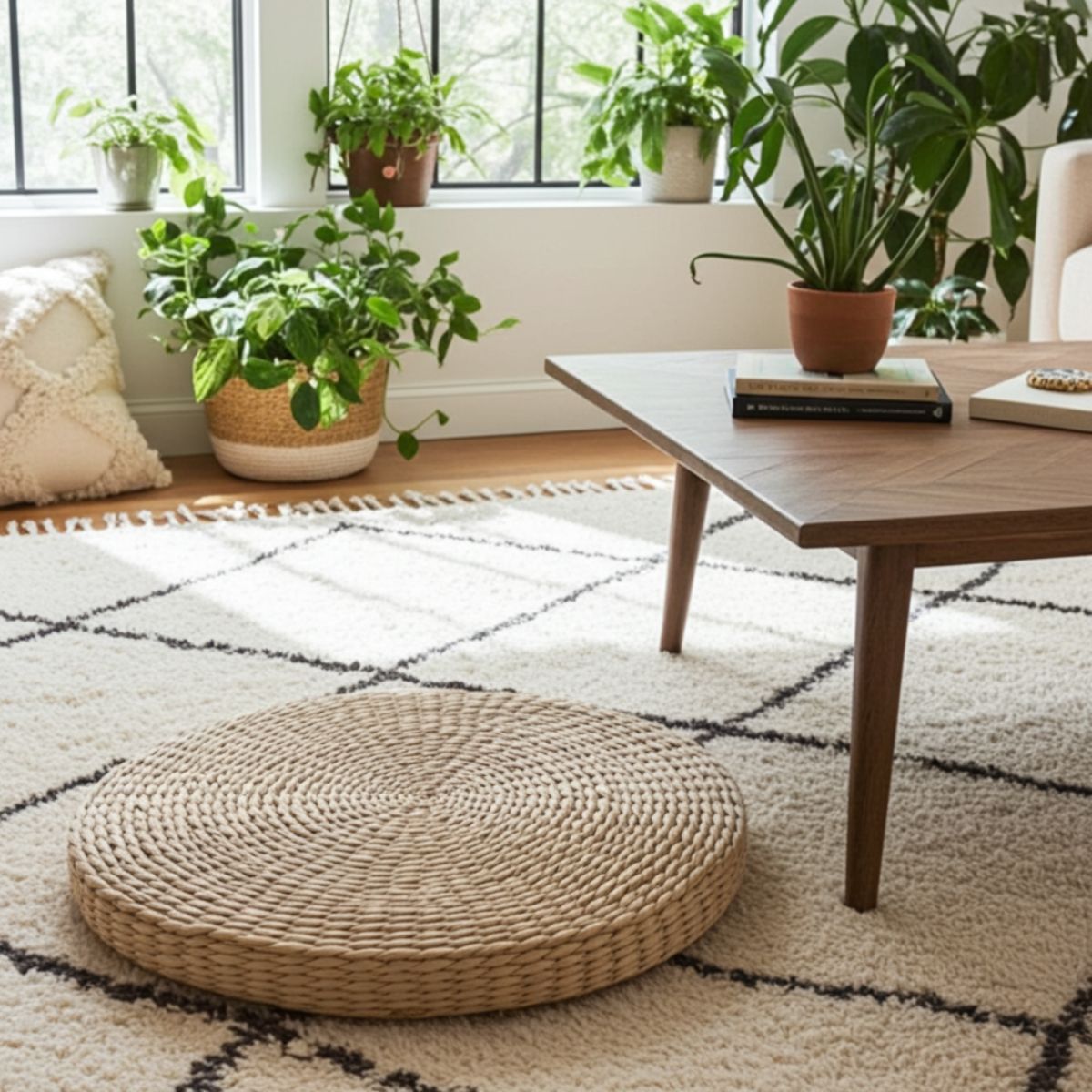
- Floor Cushions and Textured Throws — Provide tactile grounding during seated poses, meditation, or forward folds; notice weave and warmth to anchor presence.
- Natural Fibre Rugs and Woven Baskets — Offer visual and haptic calm, reinforcing a serene workspace aesthetic.
Layering these elements creates a multi-sensory “reset zone” that strengthens habit formation.
Implementation: Building a Sustainable Routine
- Micro-Breaks — Every 60–90 minutes, choose one desk yoga pose, a 3-minute meditation, or a sensory ritual.
- Morning Anchor — Combine early rising, warm water, abhyanga, and breath awareness.
- Evening Transition — Use dimmed lighting, a final body scan or loving-kindness practice, and a soothing diffuser blend.
- Weekly Reflection — Note energy levels, mood, and focus to refine practices according to personal needs.
A Calmer, More Focused Life Starts at Home
Mindful living is not about perfection but consistent, gentle return to presence. By weaving desk yoga, meditation, Ayurvedic principles, and sensory home elements into daily life, remote workers and urban dwellers can reduce cumulative stress, enhance clarity, and foster genuine well-being. Explore the collection of diffusers, singing bowls, cushions, throws, and natural fibre pieces designed precisely for these quiet, restorative moments.
Start small, remain consistent, and observe how these intentional practices transform ordinary days into opportunities for balance and vitality.
- All
- AW delivery
- Accessories
- Home and Garden
- Hobbies and Crafts
- Mindfulness and Wellbeing
- Uncategorised
- Just for Kids
- Dog Gifts
- Homeware for a Happy Home
- Beach Towels, Blankets & Throws
- Mindful Jewellery
- Clothing
- Good Lifestyle
- Back
- Aromatherapy
- Calming Tools & Devices
- Massage
- Meditation Sound Bowls
- Essential Oil Diffusers
- Aromatherapy Essential Oils
- Mindful Tech
- Evening Rituals
- Portable Calm Tools
- Sleep Aid Devices
- Red Light Devices
- Aromatherapy Massage and Bath Oil
- Back
- Boho Blankets and Throws
- Rugs
- Soap flowers
- Baskets
- Home Organisation
- Floor Cushions
- Blankets
- Candles
- Gardening
- Seagrass Rugs
- Jute Rugs
- Rag Rugs
- Back
- Seagrass Rugs
- Jute Rugs
- Rag Rugs
- Back
- Angel Bell
- Angel Caller
- Back
- Pendants and Charms
- Necklaces
- Bracelets
- Angel Bell
- Angel Caller
- Back
- Sleep Aid Devices
- Red Light Devices
- Back
- Essential Oil Diffusers
- Aromatherapy Essential Oils
- Back
- Aromatherapy Massage and Bath Oil
- Back
- Funny T-Shirts
- Hoodies
- Sweatshirts for Style and Sass
- Back
- Bags
- Mindful Mugs for Morning Positivity
- Diaries, Organisers and Planners
- Back
- Mindful Tech
- Evening Rituals
- Portable Calm Tools
- Sleep Aid Devices
- Red Light Devices
- Back
- Painting
- Candle Making
- Jigsaw Puzzles and Games
- Back
- Framed Art & Posters
- Back
- Mindful Moments for Your Mobile
- Back
- Dog Blankets
- Dog Carriers
- All Posts
- Symbolic Jewellery
- Calm Home Essentials
- Uncategorized
- Wellness & Well-being
- The Joy of Small Wins
- Mindfulness and Calm
- Health & Fitness (Dog & Human)
- Featured Products
- Back
- Red Light Therapy
- Mindful Technology
- CES devices
- Sleep Sanctuary
- Urban Wellness
- Back
- Tree of Life
- Hand of Hamsa
- Turkish Eye
- Back
- Sound Bowls
- Soft Textures